What it is
A small card on the rig, and a record behind it
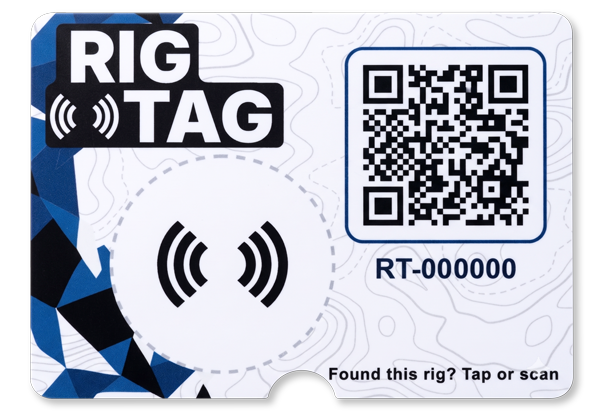
A Rig Tag is a card that lives on your rig. Hold a phone against it, or scan the QR code printed on it, and it opens that rig's record on DZSpotter. The record holds the container, the reserve, the main and the AAD with their serial numbers and dates of manufacture, every repack and appraisal a rigger recorded, and how many people have owned it.
The record is the thing that matters, and it belongs to the rig rather than to you. Sell the rig and the history goes with it instead of disappearing into your old phone. The tag is just the quickest way to open it: the same record has its own permanent link and works without a tag at all.
- Sell without asking to be believedA buyer opens the record themselves and reads every repack and appraisal a rigger entered, each with the rigger named. Link it to a DZSpotter gear listing and they can read it before they message you.
- The history goes with the rigRelease the record when you sell and it stays with the equipment for the next owner to claim, so it does not disappear into your old phone.Handing it straight to a named buyer is Rig Tag Pro and above.
- A rigger sees what has already been doneWhoever has the rig on the bench reads the container, reserve, main and AAD with their serial numbers and dates, without ringing round. What they add stays on the record after the rig moves on.
- Repack and AAD details to hand at a new dropzoneThe last reserve repack a rigger recorded and the AAD fitted, on one page you can open at the desk instead of hunting through a logbook. DZSpotter reports what was entered and works nothing out from it.
- Photographs that identify your rigUp to six on the record: the container, the data card pocket, any repair or patch. Enough for somebody to recognise it in a stolen report, which is why they are free on every tier.
- Mark it lost or stolenPuts a notice on the record and stops the tag going straight through to it, so somebody who has found the rig sees the notice first. You take it off yourself when the rig turns up.Rig Tag+ and above.
DZSpotter does not inspect equipment and does not decide whether a rig is fit to jump. It shows what a named rigger wrote down on a date, and nothing more than that.
Rig Tag cards are on sale.
See the plansHow it works
Three things, once
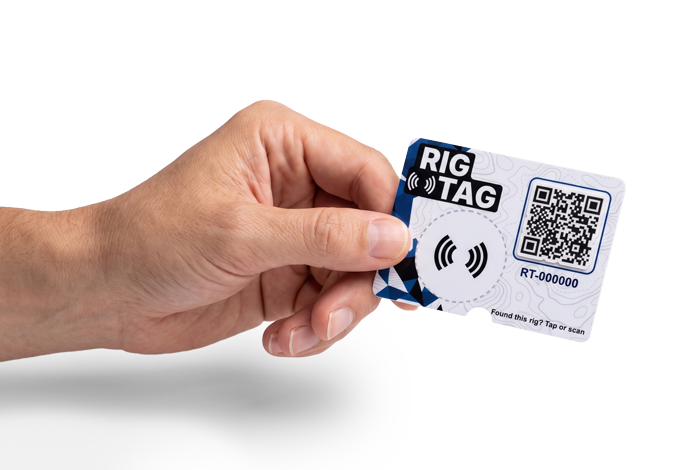
A tag is never programmed with your rig. Every one is made identical, carrying a link and its own chip number, and the two are joined in your account when you claim it. That is why a tag can be handed to you at a dropzone by somebody who has never seen your equipment.
Get a tag
A small card that goes on the rig. Every tag is identical when it is made: it carries a link and its own chip number, and nothing about your rig.
Tap it
Hold a phone against it, or scan the QR code printed on it. It opens a page in the browser. There is no app to install and nothing to pair.
Claim it to your rig
The first time it is tapped it asks which rig it belongs to. That is the moment the tag and the record are joined, and it is the only time you have to do anything.
What it is good for
Three moments it earns its place
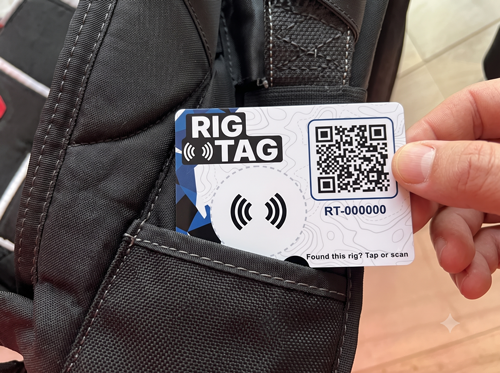
It goes where your packing data card already lives, which is where a rigger looks first: under the reserve pin cover flap, or in a pocket on the backpad. Somewhere flat, findable, and well away from anything that moves.
Selling a rig
A buyer taps the tag and reads the history themselves: the components with their serial numbers, and every repack and appraisal a rigger recorded, with the rigger named. You are not asking them to take your word for it.
A rigger at the bench
Whoever has the rig in front of them can see what has been done to it and by whom, without ringing round. What they add stays on the record after the rig has moved on.
A rig that turns up
A rig left in a hangar or handed in at a dropzone carries a link to its record, so somebody can work out where it should go. Reuniting it still depends on people talking. This gives them a starting point.
Already have a card?
Hold your phone against the tag and it opens by itself. If the chip will not read, or the printed code on the front is scuffed or missing, type the code here instead and it opens the same page.
Get one
Buy a Rig Tag
Cards are posted by hand in small batches. Each one carries a code you scan or type to link it to a rig on your DZSpotter account.
Postage included in the United Kingdom. Cards are posted by hand. Delivery and returns

The hardware
Physical Tags
The starting currency is a guess from your location, so change it if it is wrong. Card and postage prices are set separately in each currency, not converted.
A small card that goes on the rig, next to the packing data card. Tap it or scan its QR code and the rig’s record opens. It is hardware, priced once rather than by the year, and it works on every plan, Free included. No plan includes a card, and you do not need one to keep a record: every record has a QR code and a link of its own.
Cards in quantity
For lofts, dropzones and riggers fitting tags at repack. The price per card is set by how many cards go in one order.
What there is
Tiers
Free is free for ever, not a trial. Anything marked as not built yet does not exist and is not running anywhere: it is listed so the plan is legible, not to suggest it is nearly here. Stopping a paid plan drops you to Free and your record and its history stay exactly where they are. Plans are priced in pounds sterling, whichever currency is chosen above.
Free
- One rig record
- Everything you record yourself: components, serial numbers, dates
- Up to six photographs of the rig
- The last twelve months of service history
- A public link and a QR code for the record
- Release the record when you sell the rig
Rig Tag+
- Everything in Free
- The complete service history, however far back it goes
- Email reminders for your recorded repack and AAD dates
- Lost and stolen mode
Rig Tag Pro
- Everything in Rig Tag+, on up to 3 rigs
- Email reminders for your recorded repack and AAD dates
- Download the full history as a spreadsheet or a data file
- Transfer a record straight to a buyer’s account
Loft
- Everything in Rig Tag Pro, across the whole fleet
- Email reminders for your recorded repack and AAD dates
- Reserve repack and AAD dates for every rig in one place
- Customer rigs appear on your Loft page when you record a repack on them as a verified rigger
- Download every rig’s history in one spreadsheet or data file
- Tags for the whole fleet, ordered togetherNot built yet
Side by side
A cross means not included on that tier, not that it does not exist.
No plan includes a physical tag. The card is priced separately and is the same price on every tier, including Free. A record works without one: every record has its own link and QR code.
Just need the full history once?
£2 for a monthOpens the complete service history on your record for one month, then stops on its own. No physical tag: a QR code and a link, the same as Free. It is for the week you are valuing a rig, insuring one or showing it to a buyer, not a way in to a subscription.
Questions
The things people actually ask
Quick answer
A Rig Tag is a 60 x 44mm card that fits on a skydiving rig beside the packing data card. Tap it with a phone or scan the QR code printed on it and the rig's record opens in a browser: the container, reserve, main and AAD with their serial numbers and dates, and every repack and appraisal a rigger entered, each with the rigger named. The record belongs to the rig, so it goes with the equipment when the rig is sold.
Key facts
- A Rig Tag card is 60 x 44 mm and carries an NTAG215 chip plus a printed QR code and a short code.
- It needs no app: a tap or a scan opens an ordinary web page in the phone's browser.
- Every card is made identical and carries no information about any rig. The card and the record are joined the first time the card is claimed to an account.
- A rig record is free and works with no card at all, because every record has its own permanent link and QR code.
- The card costs 10 pounds in the United Kingdom with postage included, and is priced separately in dollars and euros rather than converted.
- DZSpotter does not inspect equipment and makes no assessment of whether a rig is fit to jump. It shows what a named rigger wrote down on a date.
- The record is a convenience copy. The packing data card supplied with the rig remains the legal record of reserve packing.
Limits
What a Rig Tag is not
It is not an airworthiness assessment. DZSpotter reports what was entered and calculates nothing from it.
It does not replace the packing data card. The card that came with the rig stays the legal record of reserve packing, and the tag goes beside it rather than in place of it.
It is not a tracker. The chip is passive, has no battery and no position of its own. It does nothing until a phone is held against it.
It is not a theft recovery service. Marking a record lost or stolen puts a notice in front of whoever opens it. Getting a rig back still depends on people talking to each other.
This record is a convenience copy maintained by the rig owner and by riggers. It is not a legal document. The packing data card supplied with the rig remains the legal record of reserve packing under the applicable aviation regulations. Always check the physical card.
Create a rig recordA record works on its own. You do not need a tag to make one, and you can add a tag to a record you already have.