Ask ten jumpers what has to be written down about their rig and you will get ten answers, nearly all of them bigger than the truth. The record the law forces to travel with a US sport rig runs to one sentence. The rest of a real data card is there because a manufacturer, a national body or a rigger's habit put it there.
What does the law require on a packing data card?
The travelling record comes from 14 CFR 65.131(c). The rigger who packs a parachute writes, on the packing record attached to it, the date and place of the packing and a note of any defects found on inspection, then signs with their name and certificate number. Four items, and that is the whole federal requirement for the paperwork living with your rig.
A fuller record exists but does not travel. Under 65.131(a) and (b) the rigger keeps their own log of every parachute worked on, covering type and make, serial number, the owner's name and address, the work performed, and the date and place, for two years. That one stays in the loft and does not follow the rig.
The intervals sit in 14 CFR 105.43. A reserve must have been packed by a certificated rigger within 180 days if canopy, lines and harness are nylon or similar synthetic, or 60 days if any natural fibre is present. A main must have been packed within 180 days by a rigger, by the person making the next jump, or by someone under a rigger's direct supervision. An installed AAD must be maintained per the maker's instructions.
Look at what is absent. 14 CFR 65.125(c) exempts a rigger from 65.127 through 65.133, records and seal included, when packing the main of a dual parachute pack for intentional jumping. So there is no legal US record of main packing at all. Your reserve carries a signed federal record; the canopy you land carries nothing.
Why your data card says far more than the law asks
Pick up a card and you will find serial numbers, dates of manufacture, AAD service dates, often a tally of repacks. Little of it is there because a regulation asked. PIA Technical Standard TS-135, revision 1.4 of 22 April 2010, requires at paragraph 4.1.8 only that a container provide a pocket built so the card will not be easily lost. The industry standardised the pocket, and nothing in PIA's standards specifies what the card contains.
Some of it is advice that stuck fast. FAA Advisory Circular 105-2E, issued 4 December 2013 and still active, says at 14a(4) that riggers should note AAD maintenance or battery replacement due dates on the card. Should, not must.
How often does a reserve need repacking in the UK, the US and Australia?
Cycle and paperwork both change at the border. The British Skydiving Operations Manual, amendment 2/26 of June 2026, says at Section 6 paragraph 8.10 that parachutes must be packed at least every 6 calendar months, and at 8.8 that packing and record cards must be maintained for all reserve parachutes. Paragraphs 10.1 to 10.4 put the duty to keep packing records on PTOs for their own equipment and on student skydivers for their own parachutes. The manual is amended every two months, so work from the safety manuals page.
Australia goes furthest, because the APF Operational Regulations version 01-2026 specify the card itself. OR 12.5.2 lets reserve equipment belonging to Certificate Class A holders and above be certified airworthy for up to 12 months, while student, tandem reserve and pilot emergency equipment gets up to six. OR 12.5.1 lists seven things the card must carry, including serial numbers and, for an AAD, its service expiry and battery change dates. Those AAD entries are advisory in the United States and mandatory in Australia.
The European Union has no single answer. EASA says parachutes are completely outside Regulation (EU) 2018/1139 because they are not aircraft, and that its scope covers only emergency parachutes for glider and aerobatic pilots. Recreational and tandem kit is left to each member state.
| Jurisdiction | Reserve cycle | What the record must contain |
|---|---|---|
| United States | 180 days, or 60 days with any natural fibre | Date and place, defects found, rigger's signature and certificate |
| United Kingdom | Every 6 calendar months | A card maintained for every reserve |
| Australia | Up to 12 months for Certificate Class A and above, 6 months for student and tandem | Seven fields, including serial numbers and AAD service and battery dates |
| European Union | No EU-wide rule | Set by each member state |
Checked September 2026. These change; the linked source is the current version.
What does an AAD need recorded, and where?
Three manufacturers, three answers, none requiring an entry on your data card. Airtec sets the CYPRES bands by date of manufacture, its user guide says there is no need to track a replacement date or a jump count, and its maintenance page notes that some riggers write that date on the card anyway.
| Device | Service life | Maintenance | What to record |
|---|---|---|---|
| CYPRES 2 | 12.5 years up to 2016, 15.5 years from January 2017 | Mandatory at 4 and 8 years up to 2015, voluntary at 4 and 8 for 2016, voluntary at 5 and 10 from 2017 | Nothing. The due date is read from the display |
| Vigil 2+ Cuatro | Maximum 20 years from manufacture | None scheduled, battery replaced at the factory | A Service Card after a part is replaced, kept with the rig documents |
| m2 multi | About 15 years 6 months, 5,000 flight hours or 15,000 jumps | At least every 12 months, usually at repack | Each inspection, in the device's Technical Log |
Checked September 2026. These change; the linked source is the current version.
One wrinkle is worth knowing. Vigil's site gives battery replacement as between 8 and 12 years, while the Vigil 2+ manual, version 2+.0.3, says after 10 years of use. Both are Vigil's own, and they disagree.
What binds is the manufacturer's word, because under 14 CFR 65.129(e) no rigger may pack or maintain a parachute in any manner deviating from procedures approved by the Administrator or the manufacturer. In March 2011 United Parachute Technologies, Sun Path and Strong Enterprises each issued mandatory bulletins withdrawing approval for the Argus AAD in their containers.
Your reserve canopy keeps its own count
Performance Designs tracks wear on the canopy rather than the card. The PD Ram Air Reserve Parachute Manual, MAN-0012 Rev. I, calls compliance mandatory: a diagonal line in the next box on the canopy label at every repack, an X for a deployment, and after 40 repacks or 25 deployments the reserve returns to the factory for permeability testing. It also tells riggers what to do when card and label disagree.
The history nobody is required to keep
Line it up and the pattern shows. Every requirement above describes what one person did to the rig on one day. Nothing requires a record of who has owned it, which components were swapped in and out, what was repaired after a hard opening, or how many jumps are on the main. Those are the things a buyer asks about, and nobody has to keep any of them.
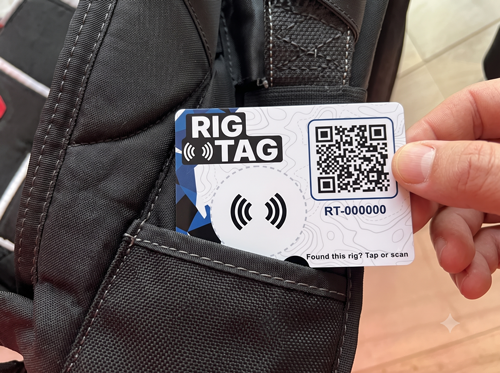
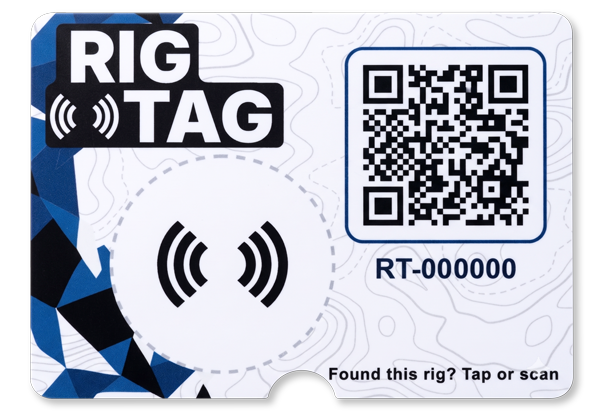
That gap is why DZSpotter built the Rig Tag and rig record system. A record holds the container, reserve, main and AAD with serial numbers and dates, plus every repack and appraisal a rigger entered, each with the rigger named. It belongs to the rig rather than to you, so it transfers when the rig sells. It grades nothing and computes nothing, and the packing data card remains the legal record of reserve packing. You can start a rig record for free.
What to ask before you buy a used rig
Ask for the data card and read it: last repack date, the rigger's name and certificate number, any noted defects. Ask the age of each component separately, since container, reserve and AAD bought at different times run out at different times. The DZSpotter guide to buying used skydiving gear covers putting those questions to a seller, and the buyer safety checks page covers what to verify before money moves.
Then take the lot to your rigger. They are the only person here qualified to say what your equipment needs next, and no card, label or database changes that.
.jpg?width=1200&length=1200&name=83152157_630067977535845_4476328019559972864_n%20(1).jpg)