Used Automatic Activation Devices (AADs)
Used Cypres, Vigil and M2 AADs: lifespan, service windows, battery life and how to calculate fair value.
2 live listings in this category right now
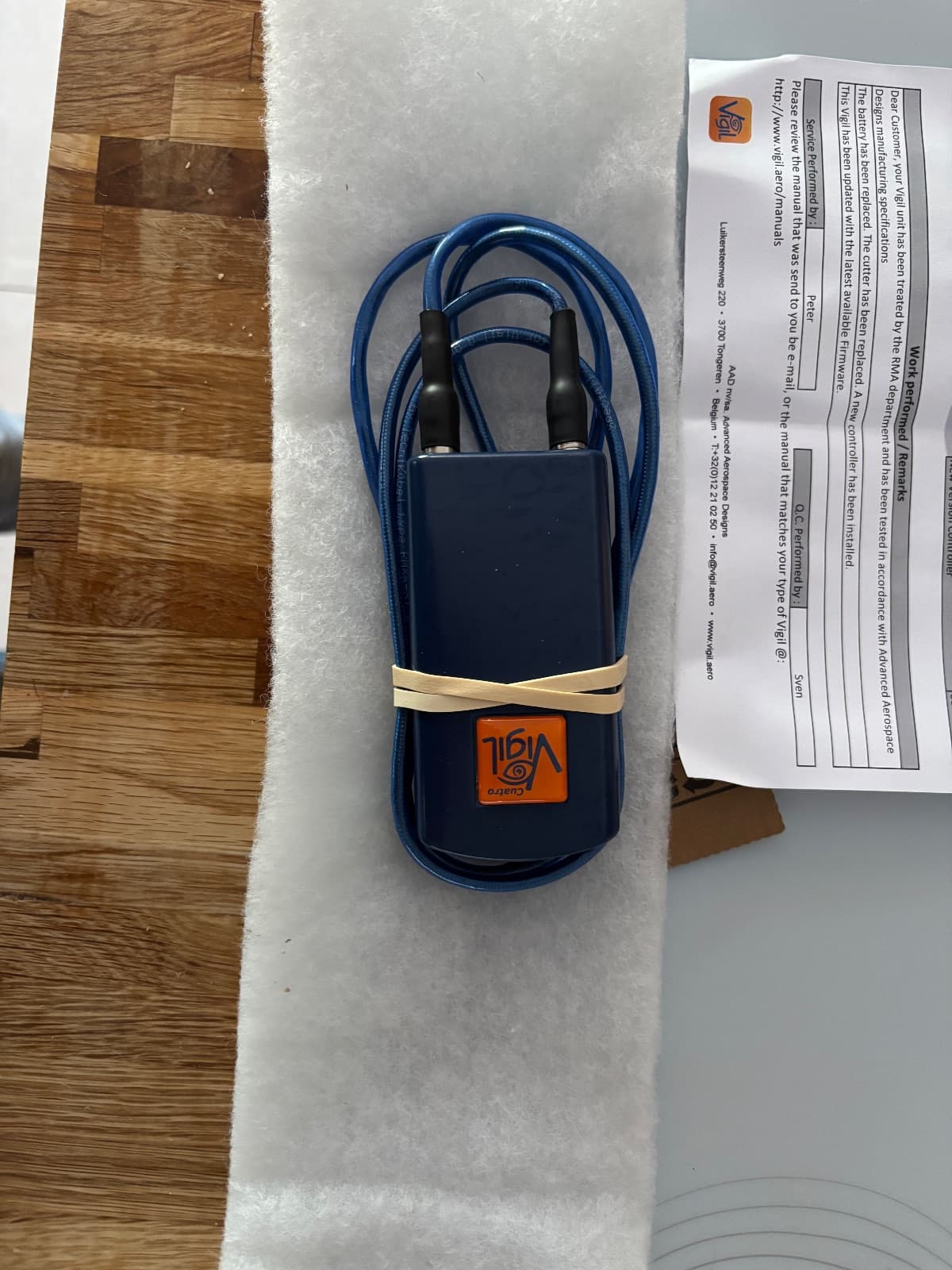
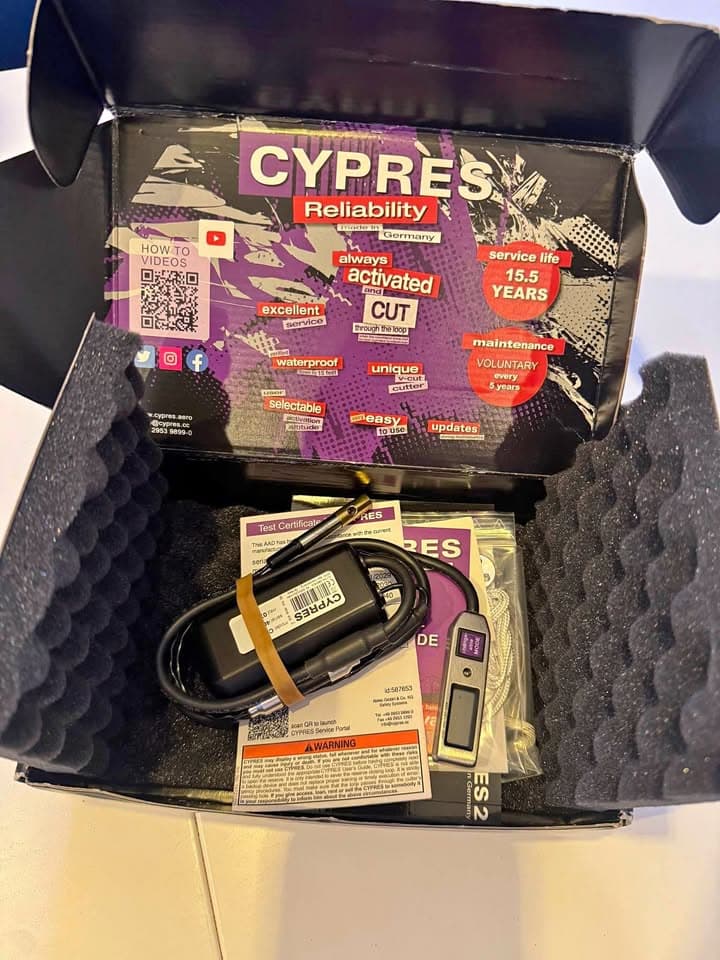
 Listed by DZSpotter.com
How an AAD works
An Automatic Activation Device continuously measures altitude and vertical speed during a skydive. If the device detects that a jumper is still in freefall below a set altitude (typically around 750 ft AGL) at a descent rate consistent with freefall (above roughly 35 m/s), it fires a cutter that severs the closing loop of the reserve container, allowing the reserve pilot chute to deploy. AADs are a last-resort safety device: they exist to save unconscious or incapacitated jumpers, not to substitute for correct emergency procedures.
The three main manufacturers of AADs currently in service are Airtec (Cypres), Aviacom (Vigil), and Parasport (M2). All three are TSO-certified and widely accepted by governing bodies worldwide.
Lifespan by brand: the critical buying factor
Cypres (Airtec)
Total lifespan: 12.5 or 15.5 years from manufacture
Service cycle: Service required at 4 and 8 years (Cypres 2) or at 6 and 11 years (Expert/Speed Cypres)
The most widely used AAD globally. Cypres units have a fixed total lifespan. Once reached, the unit is permanently deactivated. The 15.5-year Cypres 2 is a later revision; older units have 12.5-year lifespans.
Vigil (Aviacom)
Total lifespan: 20 years from manufacture
Service cycle: Service required every 4 years
The longest lifespan of any current production AAD makes Vigil units retain value well compared to Cypres units of similar age. A 10-year-old Vigil still has half its useful life remaining.
M2 (Parasport)
Total lifespan: 15.5 years from manufacture
Service cycle: Service required every 4 years
A newer entrant that has gained acceptance at most governing bodies. The M2 is compact and lightweight, making it popular for container designers targeting small pack volume.
How to value a used AAD
The fair value of any used Cypres, Vigil, or M2 is almost entirely determined by remaining service life. An AAD with 2 years of life remaining is effectively a consumable: its value should reflect the cost of disposal and any service fees, not the original purchase price. An AAD with 10 years remaining is worth a significant fraction of its new cost.
When evaluating any AAD for sale, always demand the original documentation card. The documentation card contains the unit's serial number, manufacture date, and service history. Without this card, you cannot verify the remaining life of the unit, and no rigger or governing body should accept an undocumented AAD.
Also check the battery expiry. AAD batteries are typically replaced during scheduled services, but if a unit is approaching a service interval or has an expired battery, factor the service cost into your offer.
Common questions about used AADs
How long does a used AAD last?
Total lifespan is fixed by the manufacturer from the date of manufacture, not from when it was bought: Cypres units last 12.5 or 15.5 years depending on model, Vigil units last 20 years, and M2 units last 15.5 years. None of these can be extended by servicing.
What should I ask a seller about a used AAD?
Ask for the original documentation card showing the serial number, manufacture date and service history. Without it you cannot confirm remaining life, and no rigger should accept an undocumented AAD.
Is a used AAD with a few years left worth buying?
It depends entirely on price. A unit close to the end of its service life is close to a consumable and should be priced accordingly, while a unit with most of its life remaining holds real value.
Browse current listings
View used Cypres, Vigil and M2 AADs on the DZSpotter marketplace.